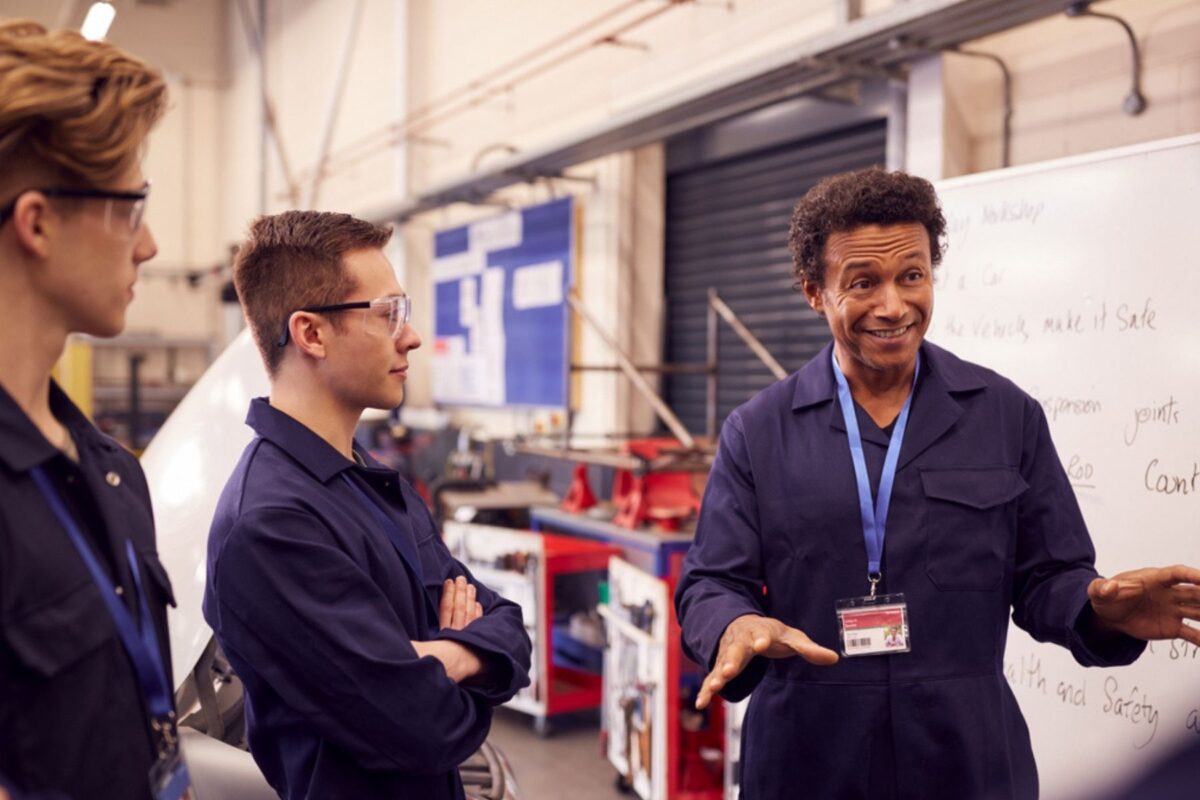
Teaching adults can be a very rewarding career. Potentially helping adults or young people aged 16-18 develop key skills that can help them in life and progress their career. Often those teaching adults will draw on their own subject specialisms or career experience to pay forward their expertise. It’s not surprising then that adult educators are often profession switchers or have always harboured a dream to pass on their knowledge.
Here are five job roles teaching adults:
- Skills for Life Teacher
- Further Education Learning & Skills Teacher
- Corporate Trainer
- Training Assessor
- Higher Education Lecturer
Now, let’s explore them a little deeper…
1. Skills for Life Teacher
A Skills for Life Teacher, or sometimes called a Functional Skills Teacher, teaches essential skills to adults and young people aged 16-18 years old. Typically, the subjects they teach are English, Maths and IT.
There are various routes into this career. You’ll need a minimum Level 3 (e.g. A-Level) in the subject you want to teach be it English, Maths or IT. You can enhance your teaching by completing a relevant Level 5 Diploma such as Education & Training, DTTLS, or a Learning & Teaching Skills Teacher Apprenticeship. If you require flexibility, consider an online course such as our Online Principles of Teaching and Learning University Diploma.
The types of tasks a Skills for Life Teacher does day to day includes:
- Putting together lesson plans
- Delivering lessons
- Assessing students
- Guiding students to their goals
- Preparing materials
More information about becoming a Skills for Life Teacher here.
2. Further Education Learning & Skills Teacher
If you have a previous career and the idea of passing on your knowledge excites you, then teaching adults and young people in an FE College could be a good fit. Essentially FE teachers teach academic and vocational skills to both young people aged 16-18 and adults in a further education setting. You’ll be teaching a wide range of students from different backgrounds and different abilities, so communication skills are important, as is the passion to teach.
FE teachers can start a role as an unqualified FE teacher if they have a level 3 qualification and lots of experience in their chosen field. They can then get qualified on the job through a relevant qualification like our online Learning & Skills diploma or Education & Training diploma.
The types of tasks an FE Teacher does day to day includes:
- Designing study programmes
- Create course materials
- Teach and motivate a diverse range of students
- Follow college procedures, including safeguarding
More information about FE Learning & Skills Teachers here.
3. Corporate Trainer
Corporate trainers develop and run training sessions to employees. They can either work directly for a company or be employed by a consultancy agency. The types of training they deliver can vary from soft skills (e.g. communication, time management), EDI (e.g. neurodiversity awareness), legislative (e.g. data protection) or industry-specific (e.g. safeguarding for educators).
There are no specific entry requirements or qualifications to become a corporate trainer. You must have excellent knowledge on the subject you are delivering, as well as the skills to deliver your material effectively. That’s where CPD in a related course can be helpful. Corporate trainers can consider enhancing their classroom skills through courses like Train the Trainer or the level 5 diplomas we’ve already mentioned.
The types of tasks a Corporate Trainer does day to day includes:
- Producing course materials
- Liaising with employees or corporate clients
- Delivering the training either face-to-face or online
- Getting feedback on their training sessions
4. Training Assessor
Training Assessors – sometimes called RQF or NVQ Assessors – support students to bring them up to the required standard and assess their work. The types of settings you’ll like find a Training Assessor include FE colleges, private training providers, and workplaces that run their own vocational training programmes. To become an assessor, you’ll need a deep knowledge of your chosen subject, as well as a level 3 assessing qualification obtained through college or an apprenticeship.
The types of tasks a Training Assessor does day to day includes:
- Observe and assess trainees
- Give constructive feedback
- Support trainees to meet the required standards
- Keep training and learner records up to date
- Liaise with trainees, other training staff and employers
More about Training Assessors here.
5. Higher Education Lecturer
HE lecturers teach an academic subject at universities or colleges that offer higher education level programmes. At universities, they may also conduct research and work towards their PhD. They’ll often contribute towards academic thought in their chosen speciality, usually in the form of writing academic papers and publishing research findings.
To get into this job role, deep knowledge of the subject is a must, and HE lecturers will have a postgraduate level qualification relevant to it. Whilst it’s not necessary to have a teaching qualification, many HE lecturers recognise the advantages of studying a course like the Learning & Teaching (Higher Education) PG Cert or the Principles of Teaching and Learning University Diploma to help them develop advanced teaching strategies and enhance their teaching skills. Ultimately, making them better teachers in the classroom.
The types of tasks a lecturer does day to day includes:
- Teach students via lectures, seminars and workshops
- Design curriculum, materials and research projects
- Set and assess work, projects and exams
More about working as a HE Lecturer here.
Making the transition into teaching adults
Whatever your current situation, if you’re determined to move into a role teaching adults, it’s possible. Draw on your past skills and experience to launch this new rewarding career and think about what other qualifications you might need. With ARU’s online undergraduate diploma in Principles of Teaching and Learning, you’ll gain the flexibility of distance learning. This makes it possible to keep working and juggle any family commitments, whilst studying this university diploma at the same time.
Find out more about the online Principles of Teaching and Learning University Diploma.