
What is an MBA?
What can an MBA do for my career?
Boost your business confidence
Transferable skills
Some of the transferable skills you’ll gain on an MBA include:
- Leadership
- Strategic thinking
- Change management
- Communication
- Research and analysis
- Critical thinking
- Digital literacy
Improve your connections
Increased earnings and job opportunities
What can I do with an MBA?
As MBAs teach the fundamentals of business administration, these skills and knowledge can be applied to various sectors. You can apply your MBA to:
- C-suite leadership
- Management
- Finance
- Healthcare
- Education
- Marketing
- Supply Chain
- Entrepreneurship
- Data
- Human Resources
- Operations
How can I fit studying an MBA with work?
One option that provides a lot of flexibility is studying an MBA through online learning. Online learning (sometimes called distance learning) is a great solution for those who want to study towards a valuable qualification to progress their career and continue to work and care for their family.
At ARU Distance Learning, our students enrol on an MBA programme that is designed specifically for online delivery – not an on-campus MBA adapted for online. Distance learning students benefit from a dedicated support team that serve ARU distance learners only. They learn on Canvas – a system designed for learning fully online. It’s why 94% of the 268 respondents to our 2026 Distance Learning Alumni Survey would recommend us.
Find out more about ARU’s 100% online MBA programme here.
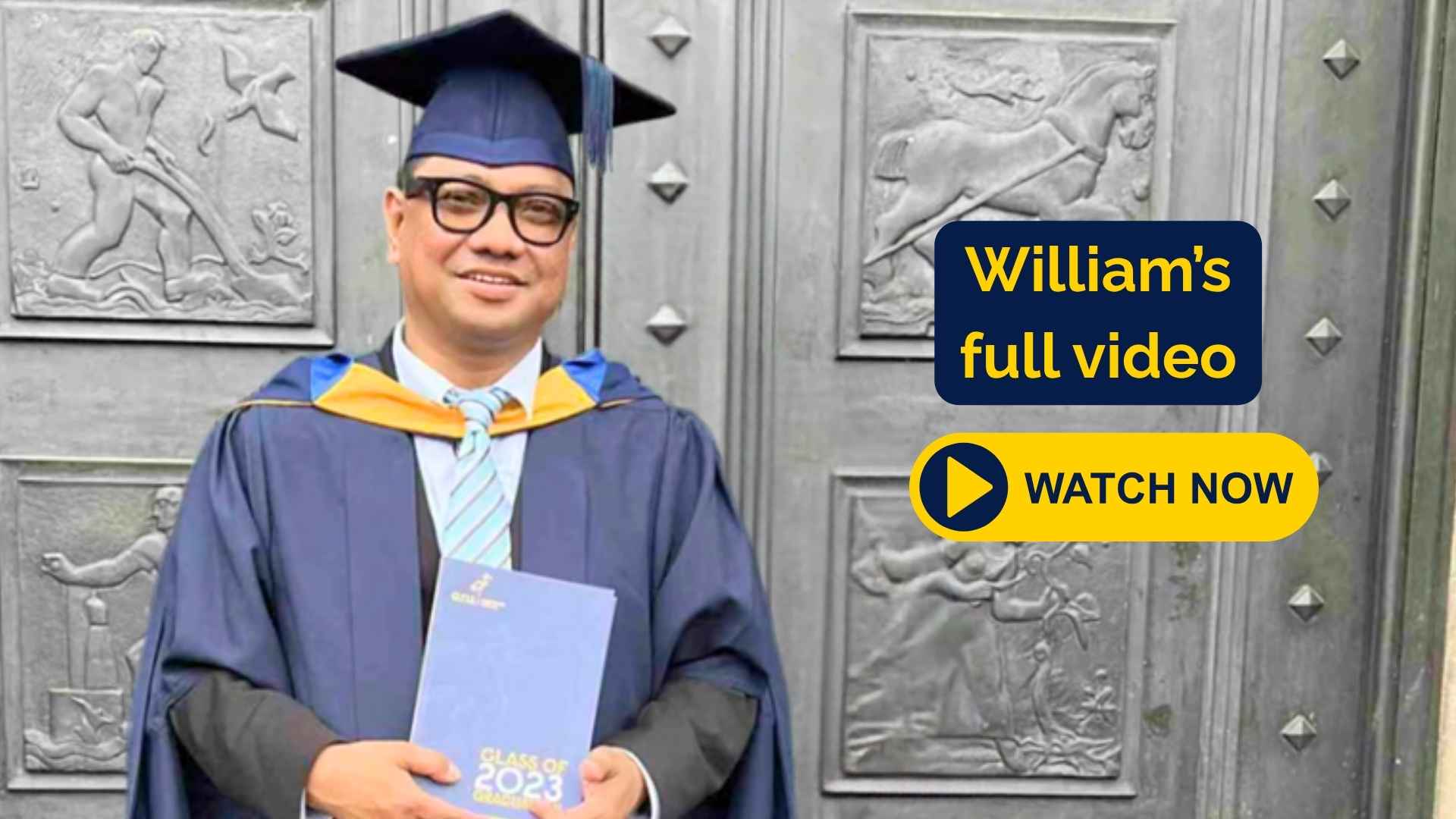
“The only regret I have is that I should have done this years ago!”
MBA Alumnus, William.
Watch his full video here
Career paths for MBA graduates: 10 jobs with MBA
1. Chief Executive Officer (CEO)
The Chief Executive Officer manages the leadership team and sets the vision for the organisation. They are overall responsible for the top-level corporate decisions and the direction of business. They need an understanding of all business functions from finance to operations to markets and advanced leadership skills and strategic thinking.
Average salary for CEO is £73,455 according to Payscale (2026).
2. Chief Finance Officer (CFO)
The Chief Finance Officer is overall responsible for the organisation’s finances. Their responsibilities include financial planning, financial analysis, managing financial risk, allocating corporate capital / funds, as well as reporting and governance.
Average salary for CFO is £101,417 according to Payscale (2026).
3. Management Consultant
An organisation usually brings in a Management Consultant to look at the business with the lens to solve a particular problem, make it more efficient and improve performance. Management Consultants are strong strategic thinkers, possess excellent research, analysis and stakeholder management skills.
Average salary for Management Consultant is £54,434 according to Payscale (2026)
4. Director of Marketing
Marketing Directors are responsible for the marketing direction and activities of an organisation. They set the marketing strategy for the whole business in line with business vision and objectives. They lead the various marketing functions and are responsible for marketing budgets.
Average salary for Director of Marketing is £79,211 according to Payscale (2026)
5. Business Analyst
Business Analysts define business problems such as inefficiencies in operations or technology, look for and propose solutions and help redefine the process to resolve the problem. They often possess excellent analytical and problem-solving skills.
Average salary for Senior Business Analyst is £60,394 according to Payscale (2026)
6. Investment Banker
Investment Bankers help large corporations and institutions to raise capital, solve client’s financial challenges and manage complex financial transactions such as mergers and acquisitions. Their role is part strategy, part advisory, part forecasting – all requiring a sound understanding of business and finance.
Average salary for Investment Banker is £60,025 according to Payscale (2026)
7. Supply Chain Manager
Supply Chain Managers manage the supply chain of a product from source to customer, dealing with several touch points such as manufacturing, warehousing, logistics and delivery to customer. They require excellent knowledge of supply chain life cycles, stakeholder management, communication and leadership skills.
Average salary for Supply Chain Manager is £45,146 according to Payscale (2026)
8. Product Manager
A Product Manager oversees the life cycle of new products from concept to development to launch, gathering usage metrics and ongoing updates. They require excellent project management and stakeholder management skills.
Average salary for Senior Product Manager is £74,496 according to Payscale (2026)
9. Business Development Manager
Business Development Managers will manage the business development team and functions, overseeing the strategy to build and engage business partnerships. They’re usually responsible for metrics associated with sales and work closely with marketing functions.
Average salary for Business Development Manager is £41,368 according to Payscale (2026)
10. Entrepreneur
Entrepreneurs will see and exploit gaps in the market to start a new business venture or start-up. Their acute understanding of business and the various functions under it – marketing, customer service, finance and more – means they are well placed to take ideas through the various processes of business planning, securing finances, marketing and selling.
There is no average salary for this type of role. What entrepreneurs earn can vary wildly depending on what stage their business is at and how many businesses they are running.
Please note that the average salaries presented here were correct at time and date of publication but are subject to change.
Find out more about our online management courses
If you’d like to know more about our 100% online MBA, you can:
- Visit the course page here
- Speak to one of our Distance Learning advisers by calling +44 (0)1245 686 707
- Email us at [email protected]
The MBA is not the only management course we offer. Find out more about our portfolio of business and management undergraduate and postgraduate online degrees here.